
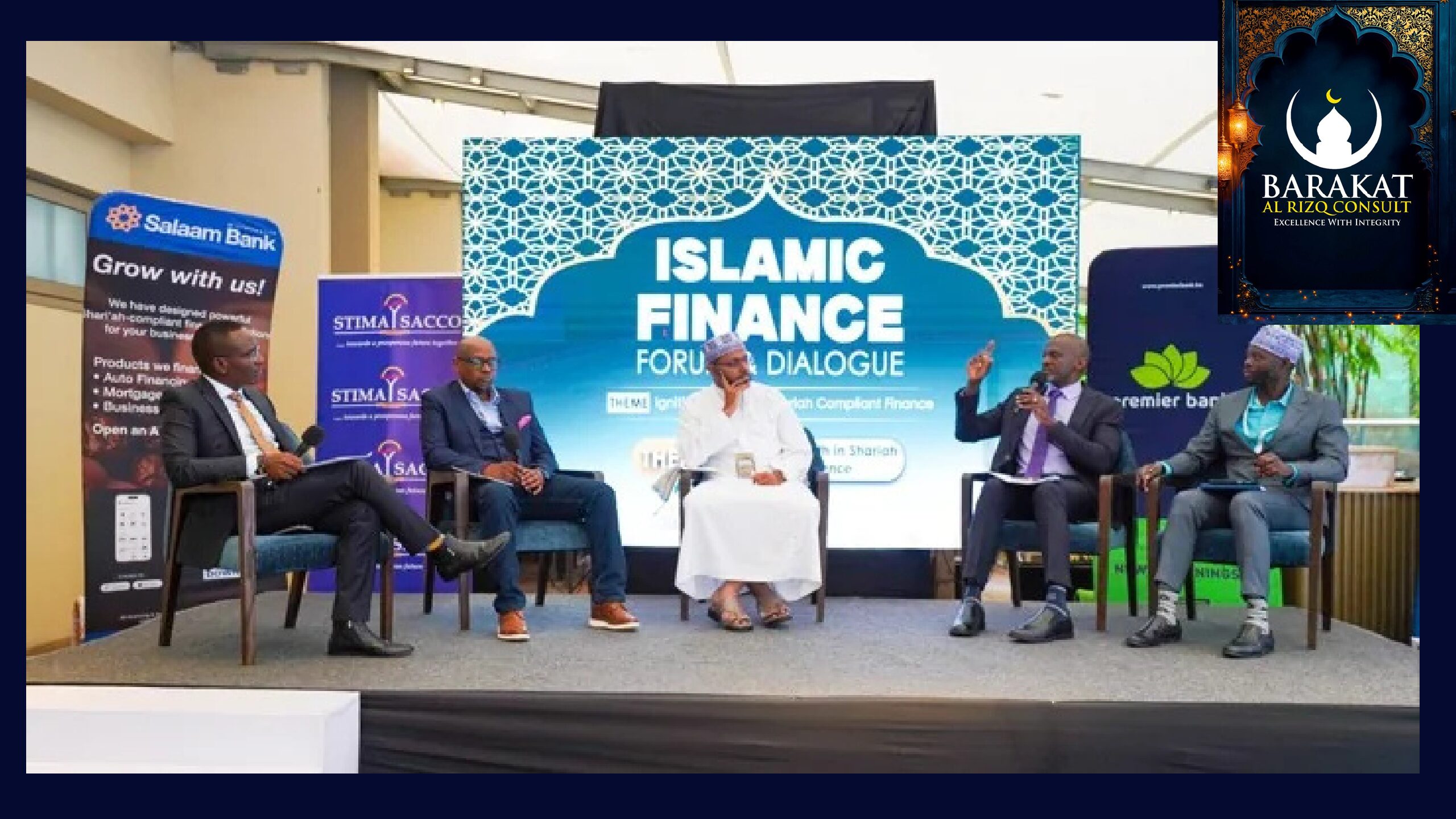
NAIROBI’S NEXT CAPITAL FRONTIER:
As global Islamic finance assets reach US$6.5 trillion, Kenya has an opportunity to connect international private wealth with investment-ready African projects. The case for fiduciary governance and Benevolent Impact Capital.
BARAKAT AL-RIZQ CONSULT FINANCIAL AND INVESTMENT RESEARCH DEPARTMENT.
The debate about Africa’s development is often framed around the amount of capital the continent needs. Less attention is given to the structures through which that capital can be mobilized, the institutions that prepare projects for investment and the governance required to protect investors and beneficiaries.
This distinction matters.
Africa’s infrastructure, energy, housing, water, agriculture and industrial development requirements are substantial. Yet the existence of financing needs does not automatically make a project investable.
Investors require credible sponsors, reliable feasibility studies, transparent ownership, realistic financial projections, clear contractual rights, appropriate risk allocation and confidence in the institutions coordinating the transaction.
The growth of Islamic finance presents an additional opportunity. With global industry assets reaching US$6.5 trillion in 2025, according to the 2026 ICD–LSEG Islamic Finance Development Report, the international Islamic financial ecosystem represents a significant source of banking, capital-market and private investment resources.
For Kenya, the opportunity is to connect this capital with the country’s developing financial infrastructure and the wider African project pipeline.
For Nairobi, the ambition should be to strengthen its role as a regional centre for responsible investment, private wealth management and cross-border financial structuring.
Nairobi’s financial opportunity
Nairobi has long been an important commercial and professional-services centre for East and Central Africa.
The development of the Nairobi International Financial Centre adds another dimension to this position. The NIFC describes itself as an operating environment intended to make investment and business activity easier in Kenya and the wider region, supported by legal and regulatory clarity.
Its stated objective includes facilitating responsible capital flows into the African continent.
This is relevant to Islamic finance because international investors do not assess a market solely on the basis of available projects. They also consider the legal environment, regulatory predictability, availability of professional services, financial-market infrastructure and the quality of local counterparties.
A credible Islamic private-finance ecosystem requires cooperation among investment advisers, banks, capital-market institutions, legal firms, Shariah scholars, Takaful providers, fund managers and project developers.
Nairobi has the opportunity to develop a stronger position within this network.
The scale of the opportunity: capital exists, but projects must be ready
The global Islamic finance industry reached US$6.5 trillion in assets in 2025, according to the latest ICD–LSEG report.
This figure does not mean that US$6.5 trillion is available for African projects. Much of the capital is held in banking assets, investment portfolios and financial institutions with specific mandates, geographic restrictions and risk requirements.
Nevertheless, the industry represents a substantial ecosystem of institutions and investors whose investment criteria may align with eligible African projects.
Potential sources include:
- Islamic banks and specialist financing institutions.
- Sovereign and institutional investment entities.
- Family offices and private wealth managers.
- Islamic investment funds.
- Sukuk investors.
- Takaful institutions.
- Private investors seeking Shariah-compliant opportunities.
The critical issue is converting an identified development need into a credible investment proposition.
A proposed solar power plant, for example, must demonstrate more than the need for electricity. It requires technical resource assessments, grid or offtake arrangements, engineering design, environmental and social approvals, construction planning, financial modelling and an appropriate financing structure.
The same applies to industrial facilities, water infrastructure, commercial property, agricultural processing and transport projects.
Project preparation is therefore a core part of capital mobilisation.
From capital introduction to fiduciary project advisory
A project sponsor may have access to land, permits, an engineering concept or a commercial opportunity, but still lack the documentation required by institutional investors.
A professional fiduciary adviser can help bridge this gap.
This involves several stages:
Project origination and screening: establishing the project’s purpose, sponsor credibility, ownership structure, location, capital requirement and preliminary eligibility.
Investment readiness: assessing feasibility studies, technical reports, commercial assumptions, financial projections and the overall development plan.
Financial structuring: examining the suitability of debt, equity, Sukuk, leasing, partnership or private financing structures.
Risk assessment: identifying construction, operational, market, credit, regulatory, environmental and governance risks.
Investor coordination: preparing investment information, coordinating due diligence and facilitating engagement with appropriate capital providers.
Transaction execution: coordinating legal documentation, compliance requirements, financing conditions and closing processes.
Post-financing oversight: supporting monitoring, reporting and accountability against the project’s agreed obligations and impact objectives.
This is a broader function than simply introducing a borrower to a financier.
It is particularly important in Islamic finance, where the underlying commercial activity, contract structure, asset ownership and allocation of obligations must be consistent with the applicable Shariah requirements.
The BIC proposition: Ihsan Qard Hasan as a distinct private-financing model
Within this developing landscape, Barakat Al-Rizq Consult’s Benevolent Impact Capital (BIC) – Ihsan Qard Hasan framework offers a distinct approach to private project financing.
Qard Hasan is a benevolent, interest-free loan under Islamic jurisprudence. Its defining feature is that the borrower is required to repay the principal advanced, without interest or a contractual financial return accruing to the lender merely because time has passed.
BIC applies this principle to qualifying private projects with a focus on productive economic activity, socioeconomic benefit and responsible capital deployment.
It is important to distinguish BIC from other Islamic financing structures.
Murabaha generates a disclosed profit through a genuine sale transaction. Ijarah involves leasing an asset or its usufruct. Musharakah is a partnership in which the parties contribute capital and share profits and losses according to the applicable rules.
Qard Hasan is different: its contractual financial obligation is the repayment of principal.
BIC should therefore not be presented as equity investment, profit-sharing finance or a conventional interest-bearing loan.
How BIC is intended to work
The framework is designed around a structured assessment and approval process.
1. Initial project submission
A project sponsor submits an initial proposal for review.
The preliminary assessment considers the nature of the business, project purpose, financing requirement, ownership, commercial prospects, socioeconomic impact and preliminary Shariah eligibility.
2. Confidentiality and onboarding
Where a proposal is considered suitable for further assessment, the relevant confidentiality and onboarding procedures are initiated.
The project sponsor is required to provide information necessary for financial, legal, operational and compliance review.
3. Shariah Investment Team assessment
Barakat’s Shariah Investment Team undertakes an internal review of the proposal.
This includes consideration of:
- Project viability and financial sustainability.
- Shariah permissibility of the underlying activities.
- Sponsor and management credibility.
- Capital requirement and intended use of funds.
- Project execution capacity.
- Risk exposure and mitigation.
- Expected socioeconomic and environmental impact.
4. Independent Shariah Supervisory Board review
Projects that progress beyond the preliminary assessment are referred to the Independent Shariah Supervisory Board.
The Board examines the relevant Shariah considerations and the transaction’s proposed contractual structure. Its review may include legal, financial, technical, operational and governance matters, supported by appropriate independent expertise.
5. Financier authorisation
The Shariah review does not itself constitute an unconditional financing commitment.
The capital provider retains responsibility for the final financing decision, subject to its own assessment, the SSB’s findings and the fulfilment of applicable conditions.
6. Takaful and risk protection
Where appropriate, the framework considers a Credit Protection Instrument supported by an appropriately structured Takaful arrangement.
The Takaful provider and policy must be examined for underwriting capacity, regulatory standing, coverage, exclusions, claims procedures, premium arrangements and Shariah compliance.
Takaful is a risk-sharing arrangement; it does not automatically eliminate default, construction, market or operational risk.
7. Documentation and disbursement
Following the required approvals and completion of conditions precedent, the relevant financing documents are executed and disbursement proceeds in accordance with the authorised terms.
8. Repayment and impact monitoring
The beneficiary repays the principal in accordance with the agreed schedule.
The project may also be monitored for financial performance, implementation progress and its intended development impact.
A numerical illustration: a US$20 million Qard Hasan facility
Consider a qualifying renewable-energy project requiring US$20 million in financing.
The following is an illustrative example of the BIC principal-only concept, not an available financing offer or a representation that a particular project has been approved.
| Facility feature | Illustrative terms |
|---|---|
| Principal advanced | US$20,000,000 |
| Financing structure | Qard Hasan |
| Interest | Nil |
| Contractual lender profit | Nil |
| Principal repayment obligation | US$20,000,000 |
| Repayment schedule | To be agreed and documented |
| Shariah governance | Independent SSB review |
| Risk mitigation | Takaful/CPI, where appropriate |
The essential distinction is that the beneficiary’s contractual repayment obligation is the principal advanced.
The capital provider does not receive interest or a predetermined financial return under the Qard arrangement.
The financier nevertheless carries credit and liquidity exposure. A credible assessment of the beneficiary’s repayment capacity is therefore essential.
Any charitable contribution encouraged by the BIC philosophy must remain genuinely voluntary and must not become a contractual benefit to the lender or a condition for obtaining the Qard.
Why impact matters
The BIC framework places emphasis on the productive and socioeconomic purpose of financing.
This reflects a wider principle within Islamic economic thought: wealth and economic activity should be directed towards permissible and beneficial purposes, with due regard to justice, responsibility and the avoidance of harm.
Projects may be assessed for their potential contribution to:
- Employment and enterprise development.
- Energy access and infrastructure.
- Food security and agricultural productivity.
- Housing and community development.
- Water and sanitation.
- Environmental sustainability.
- Industrial capacity and local supply chains.
Impact assessment must remain evidence-based. A project should not be described as sustainable merely because it uses environmental terminology or claims to create employment.
Its benefits, risks and implementation assumptions should be examined and, where possible, measured.
BIC is complementary, not a replacement for the entire capital market
The financing of a major industrial project such as the proposed Lamu refinery demonstrates the scale and complexity of large infrastructure capital requirements.
A project of approximately US$16 billion cannot reasonably be assumed to depend on one benevolent private financing facility.
Such investments require combinations of sponsor equity, institutional debt, public capital markets, strategic investors and other appropriate financial resources.
BIC has a different potential role.
It may be relevant to separately structured qualifying projects and components within the wider economic ecosystem.
For example, an industrial development may create opportunities for independent renewable-energy facilities, water-treatment infrastructure, sustainable housing, agricultural processing or community infrastructure.
Where the project and financing structure satisfy the relevant eligibility, commercial, legal and Shariah requirements, these may be considered for a suitable BIC facility.
This complementary role is important. It allows benevolent private capital to support productive development without suggesting that Qard Hasan should replace every other form of financing.
Private Islamic wealth and the African project pipeline
The expansion of Islamic finance provides a potential channel through which international private wealth can participate in African development.
However, family offices, private investors and institutional asset managers generally require more than a promising project description.
They need:
- Verified ownership and beneficial ownership.
- Reliable financial statements and projections.
- Technical feasibility and implementation plans.
- Clear legal and regulatory status.
- Transparent contractual obligations.
- Credible risk allocation.
- Independent Shariah oversight where required.
- Defined exit, repayment or distribution arrangements appropriate to the investment structure.
The development of this infrastructure is essential if African projects are to attract a greater share of international Islamic private wealth.
For Nairobi, the opportunity is to become a stronger professional and financial gateway connecting these investors with credible projects across the continent.
The importance of governance and institutional credibility
The growth of Islamic private finance must be accompanied by strong governance.
A transaction does not become Shariah-compliant merely because it is marketed to Muslim investors or uses Islamic terminology.
Its underlying business activity, financing contracts, obligations, ownership arrangements and risk allocation must be consistent with the relevant Shariah standards.
For this reason, Barakat’s framework places importance on independent Shariah supervision, financial and technical due diligence, legal review, KYC and AML/CFT procedures, sponsor assessment and appropriate risk controls.
The role of the Shariah Supervisory Board is to provide independent oversight of the relevant Shariah matters. The financier retains responsibility for the final decision to deploy its capital.
This separation is fundamental to maintaining a credible fiduciary process.
The next opportunity for Nairobi
Kenya has already demonstrated the potential of Islamic capital-market development through the Linzi Sukuk, which raised KSh3 billion for a residential development programme.
The Nairobi International Financial Centre also provides an institutional platform intended to attract global investment and facilitate responsible capital flows.
The next stage is to deepen the ecosystem.
This means strengthening specialist advisory capacity, expanding Shariah-compliant investment products, developing credible project pipelines and building connections with international Islamic financial institutions and private wealth providers.
The opportunity extends across energy, infrastructure, manufacturing, agriculture, logistics, housing and other productive sectors.
For Barakat, this is where fiduciary advisory, sustainable infrastructure and BIC can contribute.
Our ambition is to support credible African projects through disciplined assessment, appropriate financing structures and independent Shariah governance, while helping connect responsible private capital with opportunities that create lasting economic and social value.
Conclusion: financing development with integrity
Africa does not lack development opportunities. It needs more investment-ready projects, stronger financial institutions and a wider range of credible capital structures.
The global Islamic finance industry, with assets of US$6.5 trillion in 2025, offers an important part of this opportunity.
Kenya’s developing Islamic capital-market infrastructure and Nairobi’s international financial ambitions provide a foundation on which further progress can be built.
BIC – Ihsan Qard Hasan represents one possible contribution to that wider landscape: an interest-free, principal-based private financing approach intended to support qualifying productive projects under independent Shariah oversight.
At Barakat Al-Rizq Consult, we believe the future of African investment should be measured not only by the volume of capital mobilised, but also by the quality of governance, the integrity of the financing structure and the lasting benefit created by the projects it supports.
Capital with purpose. Investment with integrity. Development with barakah.
BARAKAT AL-RIZQ CONSULT
Excellence With Integrity
ENERGY. INFRASTRUCTURE. CAPITAL. IMPACT.
Research references
- ICD–LSEG, Islamic Finance Development Report 2026: https://www.lseg.com/en/data-analytics/islamic-finance/islamic-market-intelligence/islamic-finance-development-report-2026
- Nairobi International Financial Centre, official institutional profile: https://www.nifca.go.ke/discover-nifc
- Kenya Capital Markets Authority, Bi-Annual Performance Report, April–September 2024: https://www.cmarcp.or.ke/images/biannualcapitalreport/Bi-AnnualReport-April-September2024.pdf
- Kenya Capital Markets Authority, Capital Markets Soundness Report, Q2 2025: https://www.cmarcp.or.ke/images/soundness/CapitalMarketsSoundnessReportQ2.2025Volume-XXXV.pdf
- Islamic Financial Services Board, Stability Report 2025: https://www.ifsb.org/wp-content/uploads/2025/05/IFSI-Stability-Report-2025.pdf
- BlackRock, iShares MSCI World Islamic UCITS ETF factsheet, October 2026: https://www.blackrock.com/uk/literature/fact-sheet/iswd-ishares-msci-world-islamic-ucits-etf-fund-fact-sheet-en-gb.pdf
Research qualification: BIC is presented here as Barakat’s financing framework and philosophy, not as a public offer or guarantee of funding. Each proposed facility remains subject to eligibility, due diligence, independent Shariah review, financier authorisation and execution of definitive documentation. Qard Hasan requires principal repayment; any charitable contribution must be genuinely voluntary and separate from the contractual financing obligation.